C&I ESS cabinet capacities and custom quotations
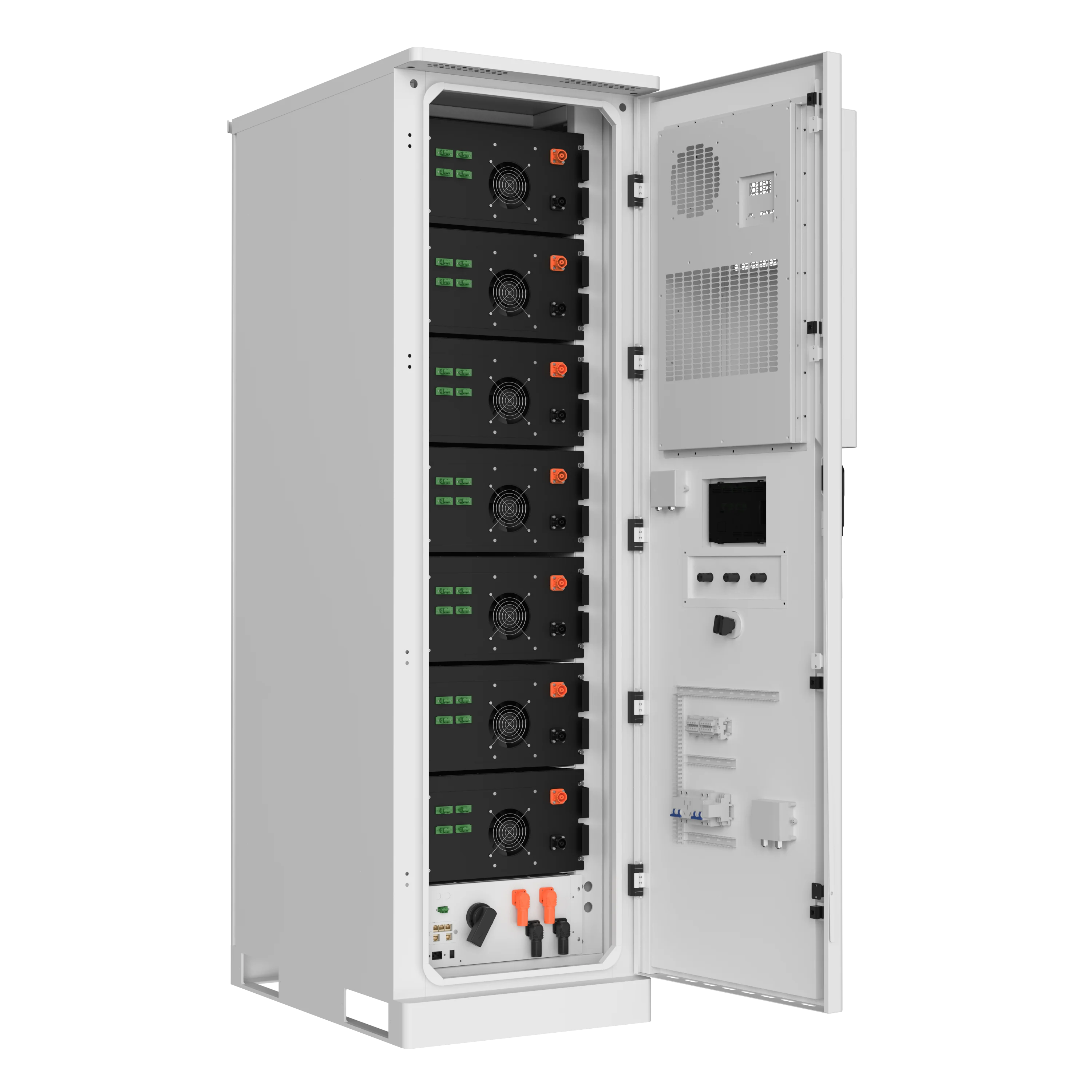
C&I High Voltage ESS Cabinet
Air-cooled or liquid-cooled configurations are subject to the approved design. Larger project capacities may require multiple cabinets; capacity alone does not define output power or usable energy.
Compare cabinet configurations · Request a custom or volume quotation
Send the destination, required kW and kWh, project quantity, application and required arrival date. The quotation will define supplied equipment and services; no certification, commissioning service or delivery date is included unless confirmed in writing.
What to include in an export quotation request
A capacity selection starts the discussion; it is not a fixed-price, fully specified system. Send the following information to receive a quote for your actual project.
| Project requirement | Provide with your enquiry | Confirm in the written quote |
|---|---|---|
| Energy and power | Required kWh, continuous kW and operating duration | Nameplate versus usable capacity, output rating and cabinet quantity |
| PCS and monitoring | Existing inverter or PCS, grid connection and EMS requirements | Included equipment, protocol integration and any software service terms |
| Installation | Indoor or outdoor site, ambient conditions and cooling preference | Cooling design, electrical protection and commissioning responsibility |
| Destination documents | Destination country and the project approval checklist | Applicable test reports and certificates for the exact configuration |
| Export and arrival | Quantity, delivery port or address and required arrival date | Packing, freight, Incoterm, duties, production schedule and transit estimate |
Request a C&I ESS project quotation or email zhou@jkess.com. Pricing, export documentation and arrival dates are confirmed per project, not assumed from a generic cabinet listing.
Qualify the supplier before comparing any price
A C&I storage quotation is only comparable once you know what the vendor actually is. Trading companies, system integrators, cabinet assemblers, and cell-to-system manufacturers all appear the same in a search result and all quote the same project, but they carry different responsibility when a cell fails in year three.
| Vendor type | What they control | What to verify before ordering |
|---|---|---|
| Trading company | Purchasing and export paperwork only. | Which factory builds the cabinet, whether the warranty is issued by that factory, and who answers a technical fault report. |
| Cabinet assembler | Enclosure, wiring, and final assembly, with bought-in cells and PCS. | Cell brand and grade, PCS brand, BMS origin, and whether the assembly is tested as a complete system. |
| System integrator | Configuration, controls integration, and commissioning. | Reference projects at the same capacity, EMS capability, and post-delivery support channel. |
| Manufacturer with in-house BMS | Battery management hardware, firmware, and system behaviour. | That the BMS is genuinely in-house, and that firmware and protocol support continue after delivery. |
BatteryBoxKit is operated by JKBMS Electronic Technology Co.,Ltd and supplies JKBMS smart BMS hardware. For a cabinet project, ask the quotation to identify the BMS, PCS and EMS suppliers and the party responsible for system integration and after-sales support.
Normalise the scope before you normalise the price
Most price gaps between C&I storage vendors are scope gaps. Put every offer on the same line items before comparing the totals.
- Cells: brand, grade (A vs B), cycle-life rating, and warranty term
- Battery management: BMS origin, protocol support, and firmware update path
- PCS: brand, rating, and whether it is included or buyer-supplied
- EMS and monitoring: local controller, cloud platform, and licence duration
- Cooling: air or liquid, and who owns the coolant circuit and its service
- Fire protection: detection, suppression, and the standard it is certified to
- Certification: which certificates are included for the destination country
- Packing and export: crate type, Incoterm, port, and dangerous-goods documentation
- Commissioning: remote support, on-site support, or buyer responsibility
- Spares and service: spare-part availability and response time after handover
The C&I ESS custom sourcing checklist expands each line into the questions to send a vendor in writing.
Export terms decide the landed cost
A cabinet price and a landed project cost are different numbers. Lithium battery systems ship as dangerous goods, which affects packing, documentation, carrier acceptance, and insurance. Confirm the Incoterm, the port of loading, whether the price includes export packing and UN38.3 documentation, and which party holds responsibility for destination customs and certification.
Ask for the cabinet dimensions and gross weight before shipping is quoted: container utilisation frequently changes the per-kWh delivered cost more than the equipment discount being negotiated.
State the duty, not the capacity, in the enquiry
Buyers commonly open with a capacity figure. A supplier who quotes straight from that number is guessing at the duty behind it, and two vendors guessing differently is where most incomparable quotations begin.
Send the operating duty instead and let each vendor size to the same brief: what the system is for, the power it must sustain, how long it must sustain it, and how often it repeats. The sizing method itself is covered in the peak-shaving guide; what matters commercially is that every vendor receives the same duty statement.
Where quoted capacity and delivered capacity diverge
Nameplate capacity is not the number the site operates on, and vendors differ in which figure they publish. Ask each supplier to state the basis for the capacity in their quotation, or the comparison is meaningless before it starts.
| Question to the vendor | Why the answers differ |
|---|---|
| Is the quoted kWh nameplate or usable? | Depth-of-discharge limits and reserve settings can separate the two figures by a wide margin on otherwise identical hardware. |
| At what temperature and C-rate is it rated? | A rating taken at a mild ambient and a low discharge rate will not be reproduced on a hot site running hard. |
| What capacity is guaranteed at end of warranty? | A retention figure with a defined cycle count is a commitment; a cycle-life claim on its own is not. |
| What voids the warranty? | Operating windows, throughput caps, and commissioning conditions decide whether the warranty survives the intended duty. |
Map the complete system architecture
A typical project may include battery modules, racks or clusters, BMU slave controllers, a BCU master controller, contactors, current sensors, fuses, insulation monitoring, high-voltage interlock, PCS, EMS, meters, switchgear, transformer, cooling, fire protection, and remote monitoring.
Review the BCU vs BMU guide before selecting the number of master and slave controls or assuming that a high-voltage control box represents a complete system.
Choose between control hardware and a configured ESS cabinet
| JKESS offering | Suitable planning stage | Important scope boundary |
|---|---|---|
| High Voltage Kit | Projects designing or sourcing BCU and BMU high-voltage battery-management hardware. | The selected master or slave control box is not a complete battery, rack, PCS, EMS, contactor cabinet, or commissioned storage system. |
| C&I High Voltage ESS Cabinet | Projects comparing configurable cabinet or multi-cabinet capacities and formal system quotations. | The final written quotation defines battery, PCS, EMS, cooling, fire protection, switchgear, services, and delivery scope. |
The current C&I ESS listing includes selectable project capacities from 64kWh to 2.09MWh and air-cooled or liquid-cooled options. Final equipment and services depend on the approved project configuration.
Ask who owns the integration boundary
A storage project fails commercially at the seams between equipment, not usually inside it. The battery, the PCS, and the EMS may each be individually competent and still not work together, and the vendor who supplied only one of them will say so.
Establish in writing which party is responsible for making the BMS, PCS, and EMS communicate, who resolves a protocol mismatch discovered during commissioning, and whether that work is inside the quoted price. A supplier who develops the battery-management layer in-house can answer this directly; a reseller usually has to refer it upstream.
The protocol and interface detail behind this question is covered in the inverter and BMS communication solution.
Cooling and fire protection change the total cost, not just the spec
Air-cooled and liquid-cooled quotations are rarely like-for-like. Liquid cooling adds pumps, coolant, leak detection, and a service obligation that continues after handover, and a quotation that omits the service interval is understating the cost of ownership rather than offering a better price.
Fire protection is the other frequent omission. Detection and suppression are often quoted as an option, and the standard they are certified to determines whether the system is accepted at the destination at all. Ask which certification is included and which the buyer must obtain locally. Compare the thermal trade-off itself in the ESS cooling guide.
Send every vendor the same enquiry
Quotations only become comparable when the enquiry was identical. Send this once, to every supplier on the list, and require the response in the same structure.
- Destination country and site conditions, including ambient temperature range
- What the system is for, and the power and duration it must sustain
- How often the duty repeats, daily and annually
- Whether the quoted capacity is nameplate or usable, and at what rating conditions
- Cell brand and grade, and the warranty retention figure at a stated cycle count
- Whether PCS and EMS are included, and which brands
- Who owns BMS, PCS, and EMS integration, and whether commissioning is included
- Cooling type, and the service interval and consumables it commits the buyer to
- Fire detection and suppression, and the standard it is certified to
- Which destination certificates are included and which the buyer must obtain
- Incoterm, port of loading, export packing, and dangerous-goods documentation
- Cabinet dimensions and gross weight, for container planning
- Spare-part availability and support response time after handover
- Lead time, payment terms, and project quantity
The C&I ESS custom sourcing checklist expands each line into the wording to send, and the project-planning guide covers the engineering inputs behind them.
Build the quotation around the operating requirement
Send the energy, power, site, grid, cooling, controls, safety, and delivery-scope information for a formal configuration review.