Download the document for your battery box
The caster document is an assembly manual; the 6U document is a product specification. Neither replaces the installation instructions for the exact BMS fitted to your kit.
Related products and current prices
Examples from the current catalog, not a compatibility shortlist. Confirm the exact BMS, firmware, pinout and included package before ordering. Prices in USD.
All JKBMS models and accessories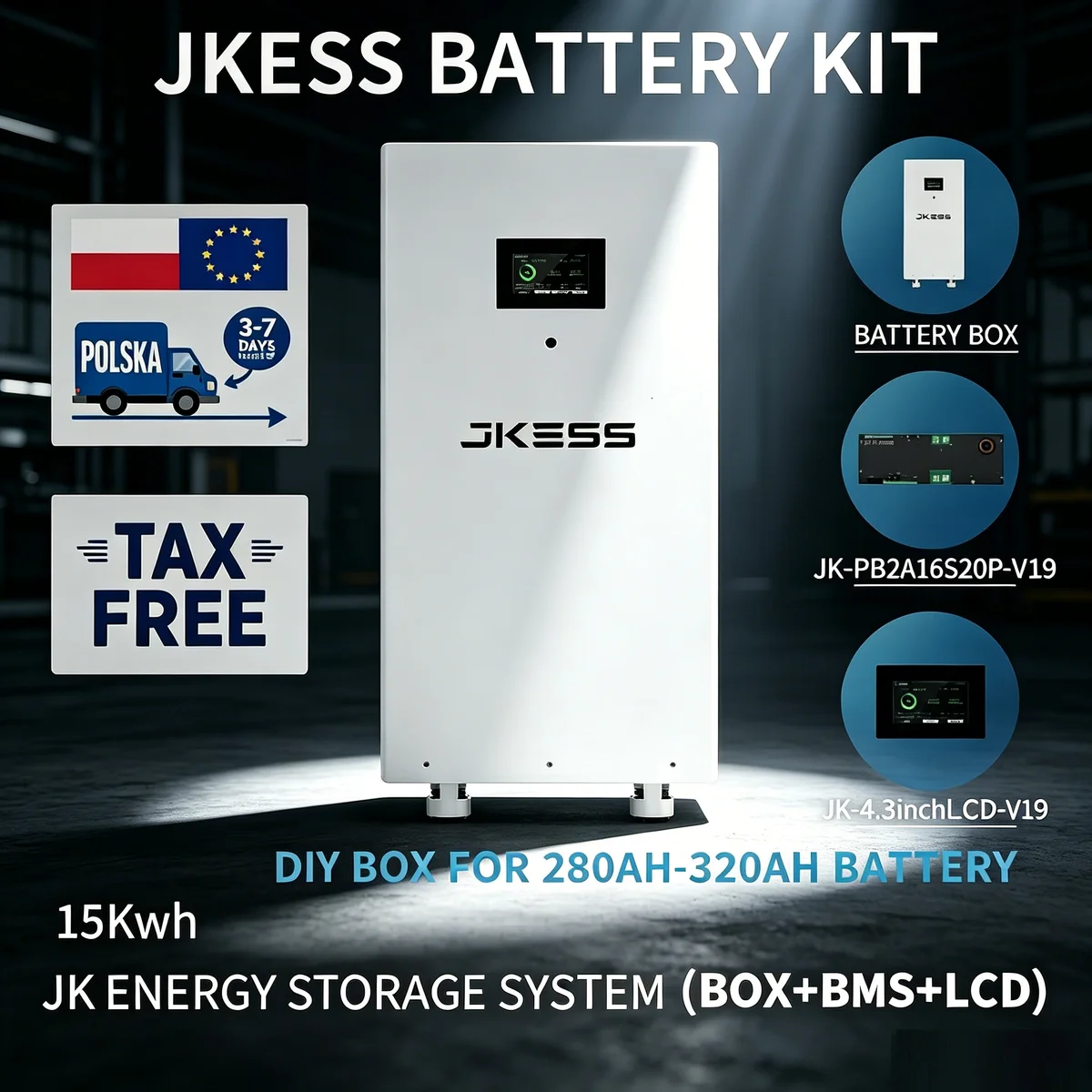
Documents are filed by format, not by brand
There is no single manual covering every JKESS enclosure. The rack format and the caster format are different mechanical products with different assembly orders, and the display, communication and high-voltage control hardware are documented separately because they are commissioned separately.
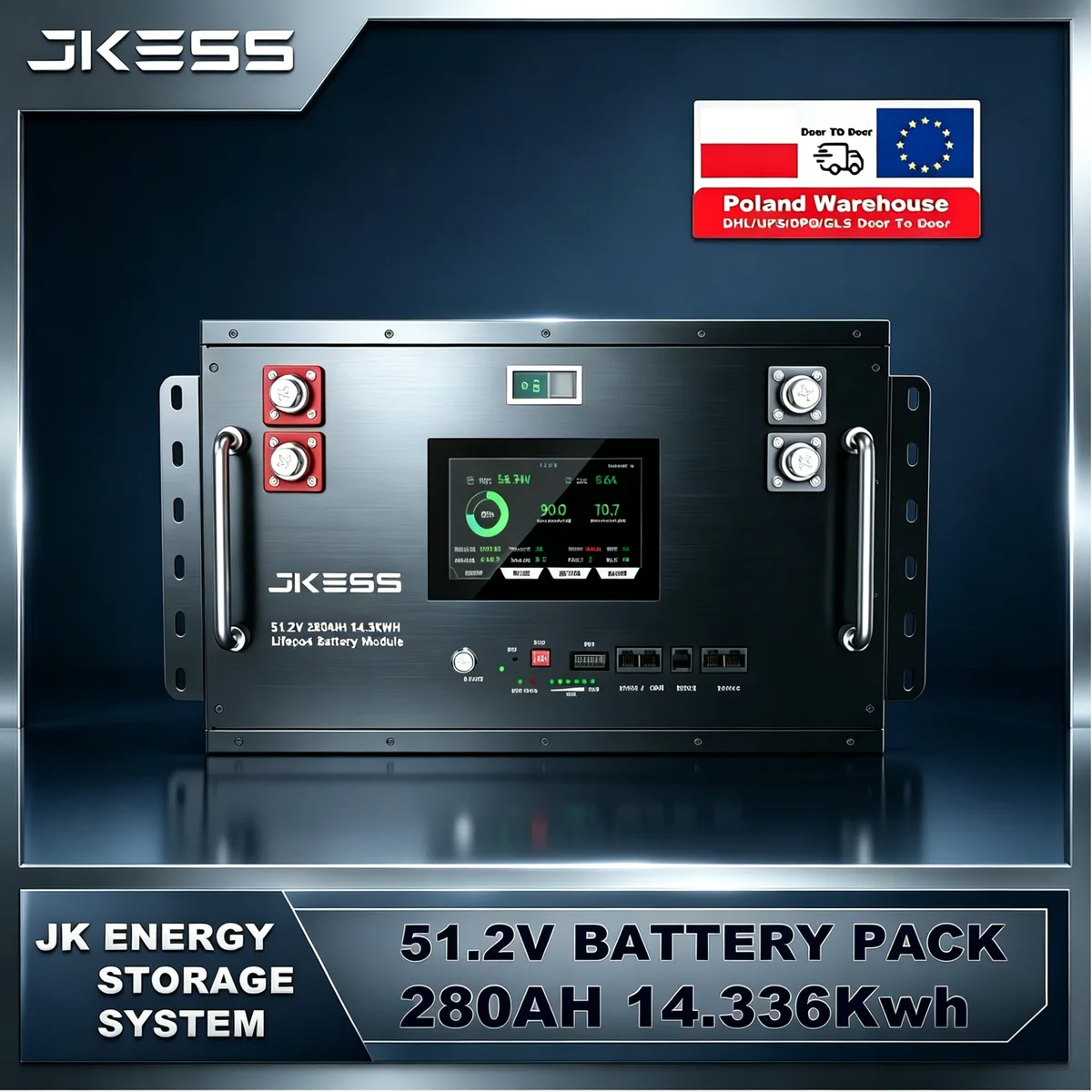
The library currently holds a 6U lithium battery kit specification and a roller lithium battery sheet-metal kit manual. Start from the format you were shipped rather than from the brand name.
Four measurements decide whether the cells fit
Cell capacity in amp-hours does not predict fit. Two 280Ah prismatic cells from different production runs can differ by several millimetres in a direction that matters, and the stack multiplies the difference by the cell count.
- Cell width and depth at the widest point, including any wrap
- Height over the terminal posts, not to the case top
- Stack length for the full cell count, plus the compression allowance the design expects
- Terminal orientation and polarity sequence, which sets busbar length and whether the arrangement can be mirrored
What a kit contains, and what it will not
A kit covers the metal work and the hardware listed on the product page. Cells, external breakers, chargers, inverters, installation and commissioning are outside that unless the page or the written quotation says otherwise.
Before starting assembly, lay the packing list against the manual and confirm the busbar set, insulation parts, sense-lead harness, current sensor, fuse or breaker provision, cable routing, and which BMS and display the box was drilled for.
Rack height is one of six rack constraints
A search for a 4U or 6U enclosure is asking about vertical height, and height alone never establishes that a battery will go into a given rack. The current JKESS rack kit is a 6U format.
A loaded lithium module is far heavier than the IT equipment most racks were specified for, and its mass sits low and forward. Confirm depth, rail spacing and rail type, static load rating per rack and per rail, front and rear service clearance, cable bend radius at the rear, and the airflow path before ordering.
What a custom enclosure request has to contain
Custom sheet metal for lithium batteries starts from a confirmed electrical design, not from an outline drawing. The current path, insulation distances and thermal behaviour all set dimensions, so a drawing produced before those are fixed gets redrawn.
- Cell model, quantity, arrangement and the compression method
- Target rack units, external envelope, rail spacing and maximum loaded mass
- BMS, display, current sensor, fuse, breaker and connector positions
- Busbar layout, continuous current and cable entry points
- Ventilation or cooling interface, ingress protection, finish and labelling
- Prototype quantity, production volume, destination and required dates
Questions this raises most often
From the downloads library, under Kits. Pick the document that matches the format you were shipped -- rack and caster kits assemble differently.
No, unless the product page or the written quotation lists them. A kit covers the metal work and the hardware named on the page.
No. Beyond height, confirm depth, rail spacing and type, load rating, service clearance, cable bend radius and airflow before assuming any rack will take a battery module.
Width and depth at the widest point including the wrap, height over the terminals, stack length for the full count plus compression allowance, and terminal orientation.
Take it to a part number
Ratings vary between codes that read almost the same, so settle the decision here and then confirm the figures on the product page for the exact code.