Reading the model code
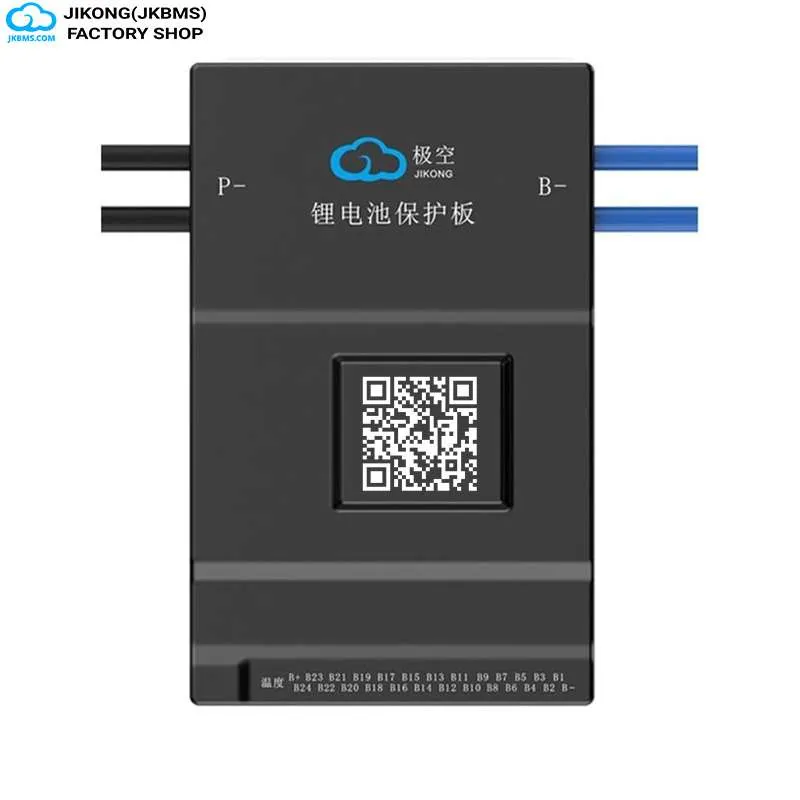
BD4A- Family segment, and the part buyers most often read wrong. The 4A is the balancing class carried by every BD4A board, so JK-BD4A24S10P moves charge at 0.4A between cells — a different figure from anything in the tail of the code.
24S- Maximum cells in series, which is roughly 76.8V nominal with LiFePO4 cells. It is a ceiling: nothing is wasted by running fewer cells.
10P- Continuous discharge position. The spec table on this page lists 100A, and that is the figure to size cable, terminals and the protective device against.
What actually changes between these codes
The closest step below this board inside BD4A is JK-BD4A24S8P: same 24S ceiling, same 0.4A balancer, only the continuous rating moves, to 80A. US$15.70 separates the two at the base configuration. Size that gap against the load actually drawn, because nothing else about the two boards changes.
JK-BD4A20S10P holds the same 100A continuous rating and changes only the string ceiling: 76.8V nominal here against 64V there. Cell count is fixed by the pack being built, so it is the constraint that comes first.
JK-BD6A24S10P is the other candidate for the same pack: 24S, 100A, 0.6A balancing rather than 0.4A. It sits US$2.90 above this listing at the base configuration. If the cells are matched and the duty cycle leaves idle time, the cheaper of the two is the right answer; if they are not, no protection setting replaces balance current.
13 BD4A codes are priced here, from US$69.31 for JK-BD4A8S4P to US$89.03 for JK-BD4A24S8P; JK-BD4A24S10P is 7 of that set at US$73.33 before configuration options. The spread across the family is a ratings spread rather than a margin spread, so quote the cheapest code that clears the calculation.