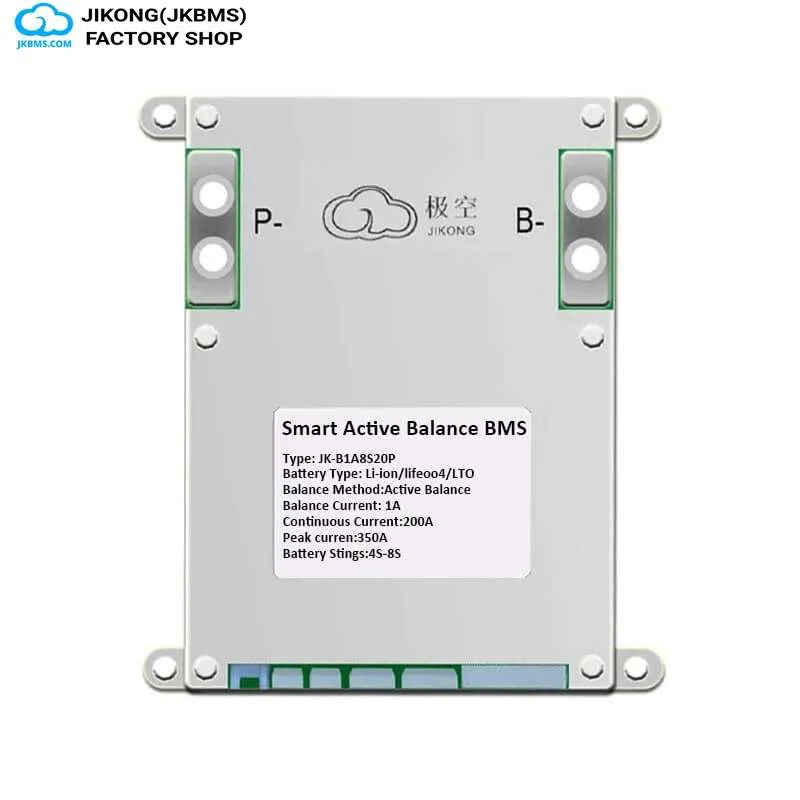
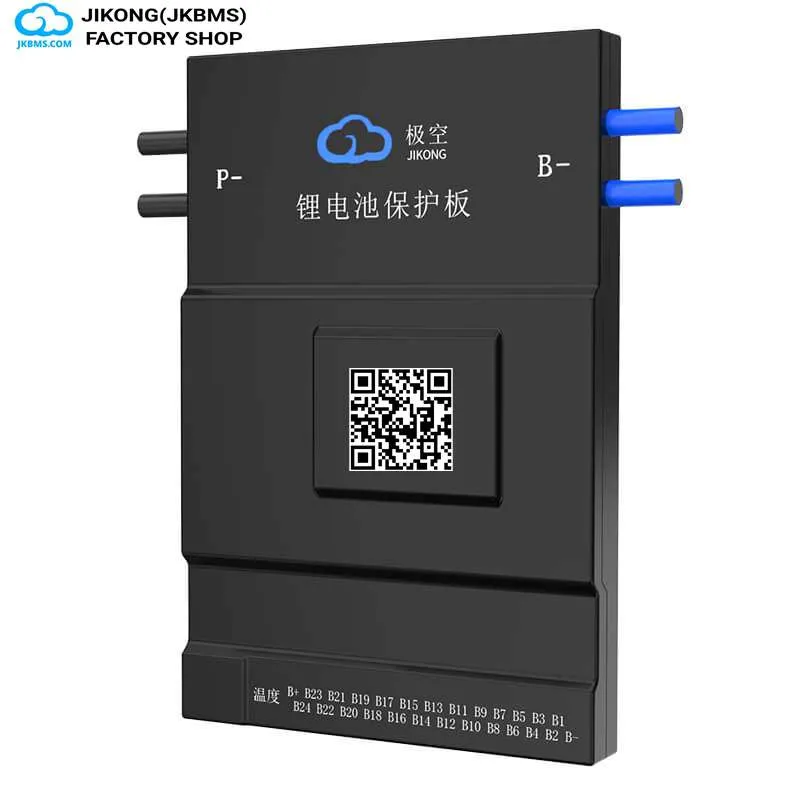
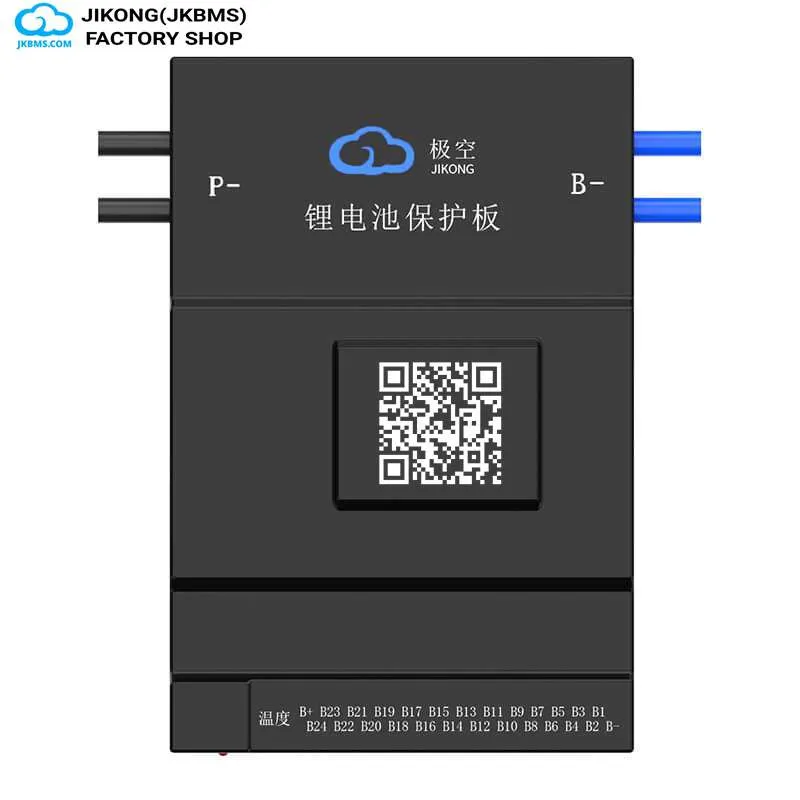
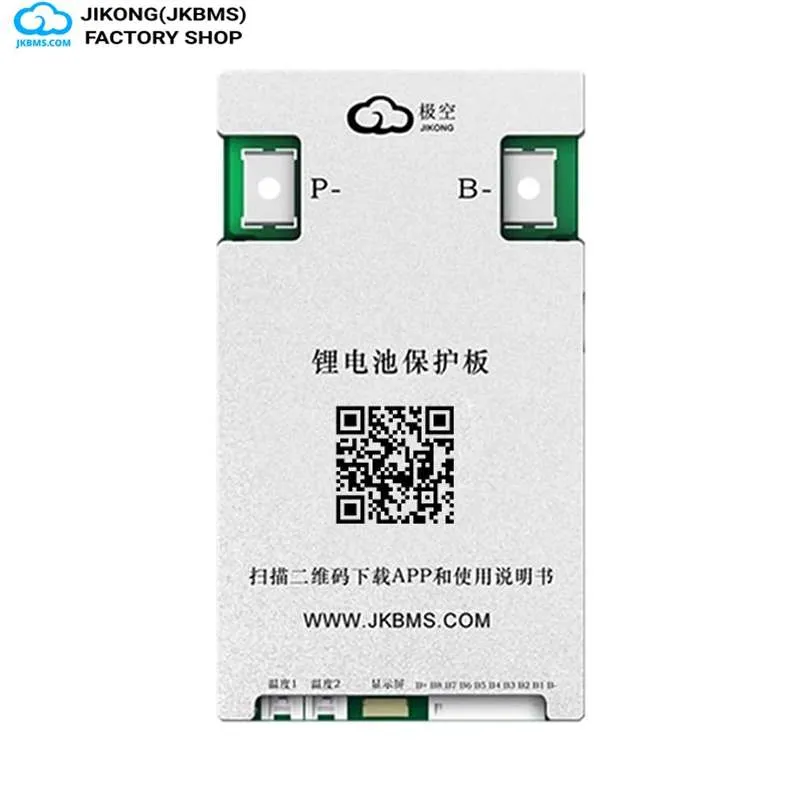
Reading the model code
B1A- Family segment, and the part buyers most often read wrong. The 1A is the balancing class carried by every B1A board, so JK-B1A8S20P moves charge at 1A between cells — a different figure from anything in the tail of the code.
8S- Maximum cells in series, which is roughly 25.6V nominal with LiFePO4 cells. It is a ceiling: nothing is wasted by running fewer cells.
20P- Where the continuous rating lives in the code. Stated on this page as 200A, and it is a ceiling rather than a target.
What actually changes between these codes
The closest step below this board inside B1A is JK-B1A8S10P: same 8S ceiling, same 1A balancer, only the continuous rating moves, to 100A. US$8.82 separates the two at the base configuration. Size that gap against the load actually drawn, because nothing else about the two boards changes.
JK-B2A8S20P is the other candidate for the same pack: 8S, 200A, 2A balancing rather than 1A. It sits US$10.00 above this listing at the base configuration. If the cells are matched and the duty cycle leaves idle time, the cheaper of the two is the right answer; if they are not, no protection setting replaces balance current.
4 B1A codes are priced here, from US$71.16 for JK-B1A8S10P to US$86.98 for JK-B1A24S15P; JK-B1A8S20P is 2 of that set at US$79.98 before configuration options. The spread across the family is a ratings spread rather than a margin spread, so quote the cheapest code that clears the calculation.
JK-B1A8S20P is listed in 3 configurations. JK-B1A8S20P at US$79.98 against JK-B1A8S20P+4.3″ Display at US$114.96 is a spread of US$34.98, which is the figure to weigh before assuming a bundle is cheaper than sourcing the add-on separately.